Monday, January 24, 2011

This is how you know the trees are celebrating.


When the almond trees bloom it is the birthday of the trees in Israel. Here is one with snow in the Golan.

Sunday, January 23, 2011

Birthday of the trees

Some reflections on the trees' birthday:


carob tree

I have been kind of busy lately. Noteworthy that my last blog post was in October of 2010. Interesting that that post talked about the Jewish Fall Harvest Festival of Sukkot. Noteworthy because I want to add a little post about another Jewish Holiday that just passed called Tu B'shevat. Or the 15h of the month of Shevat in the Hebrew calendar. This year it was January 20. Both holidays center on nature. The Jewish calendar is full of holidays and cycles. And Judaism celebrates several "new years". There is Rosh Hashana - the birthday of the Universe. There is Pesach which is like the birth of life and freedom. Tu b'Shevat celebrates our relationship to trees and what they produce. It is a day to mark the aging of the trees we plant for fruit and nuts. The holiday calls us to bring forth fifteen different species and types of fruit from trees. On Sukkot, there are four species that are necessary to the celebration of that holiday. The Israeli rainy season begins with Sukkot and ends around Tu b'Shevat. Most importantly to me, it seems that a woodworker ought to pay respect to the source of his material!
olives


Here is a brief explanation from Chabad.org:

"Tu B’Shevat, the 15th of Shevat on the Jewish calendar is the day that marks the beginning of a “New Year for Trees.” This is the season in which the earliest-blooming trees in the Land of Israel emerge from their winter sleep and begin a new fruit-bearing cycle.

figs

Legally, the “New Year for Trees” relates to the various tithes that are separated from produce grown in the Holy Land. (Tu B'Shevat is the new year for the purpose of calculating the age of trees for tithing. See Lev. 19:23-25, which states that fruit from trees may not be eaten during the first three years; the fourth year's fruit is for G-d, and after that, you can eat the fruit. Each tree is considered to have aged one year as of Tu B'Shevat, so if you planted a tree on Shevat 14, it begins its second year the next day, but if you plant a tree two days later, on Shevat 16, it does not reach its second year until the next Tu B'Shevat.)"
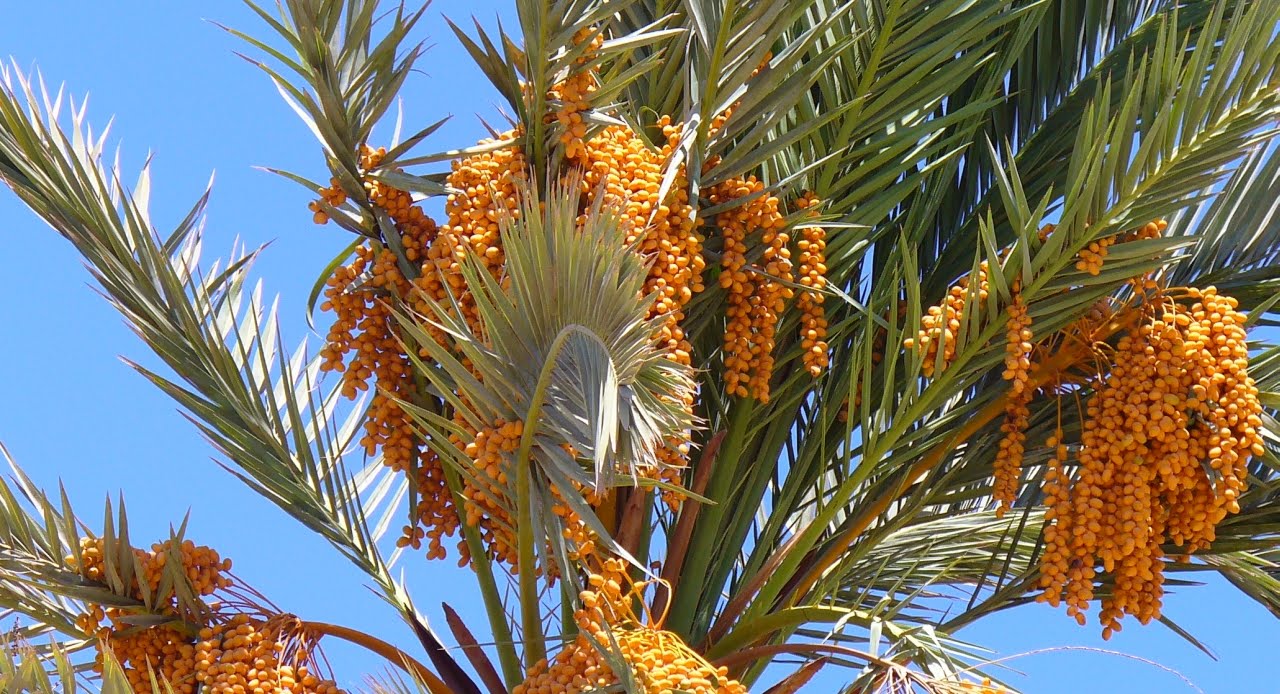
dates

For me, the awareness that I have learned in Judaism of a respect for Nature was a revelation. Sukkot is like Earth Day and Tu B'Shevat is like an arbor day. Yet these are not modern inventions, but date back thousands of years. The sabbatical year of letting the land rest (every 7 years) and the mandate to give a portion of one's produce to the needy are other aspects of Judaism's relationship to nature and to fellow people that have moved me.

For several years when my children were of pre-school age, I would visit their school on Tu B'Shevat and talk to the children about trees and what they produce. I would bring a can of cherries, a bottle of maple syrup and a bag of walnuts. Then I would show them maple, cherry, and walnut wood scraps from my shop. After the brief "lecture" I would turn them loose with a pile of wood scraps, some plywood squares and lots of glue. They had a blast.

For me, Tu B'Shevat is a reminder of intentionality. We can become better people if we think before we act. Thinking about the source of my raw material before I joint, plane, cut and glue it up reminds me not to take Nature for granted and to be thankful. Do you have any Holiday or ritual to do so?


Saturday, October 2, 2010

Well this is what the decorated sukkah looked like after a week of using it, rain and weather, etc. We enjoyed some warm nights, the beginning of fall weather, guests from Israel and Alliance, Ohio among others. I can't imagine why more Jews don't erect one and soak in what is to me the most enjoyable of all holidays. A chance to sit outside and enjoy nature, to consider our humble state as temporary residents of the planet and consider what we can do to become better people. All while drinking wine and eating with friends au plein air!

Tuesday, September 21, 2010


OK - so here is how ours starts each year. I have built this one out of ceder and coated it in an exterior wood stain. There are no metal fasteners, just through tenons and doweled wedges. I will show you a detail shot tomorrow.

Each piece can be disassembled and all are labeled. The rest of the year it gets stored in the garage.

What is to be read in the sukkah? One time honored choice is "Ecclesiastes" or in the Hebrew "Ḳohelet" - The origin of the expression, "to everything there is a season" is from that book, thought to have been written by Solomon.

Monday, September 20, 2010

well...

I know its been a busy summer and I am preparing for High Point and also for a new Home store called "Elemental Arts" that I am opening in downtown Canton, but I did just notice that it has been some time since my last post!

The Jewish New Year and holidays of Rosh Hashana and Yom Kippur are behind me so it is a good time to begin anew. And what would a Jewish Carpenter be thinking about right now? The holiday of sukkot which starts in a few days with the full moon and is one of the more colorful and purely fun of all the holidays. AND because it takes place outside in a "booth" or hut (meaning of sukkah) and because a sukkah is made of wood, I have some ideas to share about its construction. In the next few days I will post pictures of the sukkah I built several years ago and which is made to be portable and reusable. It is also friendly to the spirit of the holiday as it has no metal fasteners. (potential instruments of war after being melted down)


One of the key aspects of the holiday are guests. It is commanded to entertain guests, to share a meal or something to drink in the sukkah and to dwell (sleeping bags are needed at night here in NE Ohio) in it. Some come on over for a glass of wine or beer... Decoration is done with natural and specified materials such as willow branches (which we have) and palm fronds (which we don't) so we will use grasses, corn stalks. tree branches and other materials for this temporary - emphasis on temporary building. It is not supposed to be built "too well".


Tuesday, May 25, 2010

Gus


If you haven't seen this creature yet or met him in person, he has weaseled his way into being the mascot for our new line of furniture. But all kidding aside, he knew exactly what to do in front of the camera and held his pose like a pro until I told him to relax. Watch out William Wegman.

Sunday, May 23, 2010

What I learned by showing my work in an "Art Show"

(above image by Katie Balas)

I have done a number of trade shows in the furniture industry, and even the Architectural Digest Home Show in New York City, where the public was invited in for three days, but I just completed my first all to the public "Art Show" in my home town of Canton, Ohio. The Canton National Art Show was just completed.

So what did I learn from two and a half days of direct to the public interaction? First of all that you never can tell who is going to show up in your booth. Secondly, that you should never overestimate the educational level of the visitors but that doesn't mean that they don't have something valuable to say and learn. Lastly, that being in front of a public which expects in general to be buying "a little something" at least is a great market test experience.

1) At the end of the first full day, a young woman came into the booth and was looking quietly at my items and asked if she could take several cards for her husband who is an architect. In my little city of Canton, one doesn't have high expectations for visitors, but there are pleasant surprises. I once had a conversation in the airport here with Macy Gray's mother who was picking up her children. Ms. Gray is from this town originally. Well, the visitor I encountered, told me after chatting for a little while that she is from New York City and is a classical singer. I looked her up on Google later and learned that she seems to be quite well established with several recordings and her architect husband is successful enough to be recognized by Forbes for his business on several continents. She was visiting family here apparently.

2) At the other end of the experience spectrum I talked with a young couple who were admiring one of my nightstands and asked if I could open the drawers for them to see the inside. They were so impressed with the quality of the work. The male partner blurted out to his companion's embarrassment that he now understood the difference in quality between well made domestic things and what you get from Value City Furniture. But I was not offended and I did not want her to be embarrassed, because that is an important lesson, and how else can you appreciate the distinction without seeing the two versions with your own eyes. I think they both learned that there is a range of quality and craftsmanship and that there aren't just subtle variations in that spectrum.

3) I needed to bring some additional items to the Museum in order to "beef up" my display and to have some options in price for people who were browsing. One piece that I was reluctant to bring because I was not sure about its design success and color was my "Quarter Round" table.
http://straussfurniture.com/?page=deco . It is also called the Circular Modular Coffee Table on my website. I sold the piece during the show to a visiting couple and had another customer who wanted to have me put it on hold. It looked much better in the Museum than it did in my shop and people responded to its playfulness and its versatility. I have a new found respect for learning from the public.